featured project
Dear Black Man, You Good? (DBMYG) is a Philadelphia-based nonprofit founded in 2024. My work with them centered on developing a logo that authentically reflects and resonates with its core audience: Black men and boys. As a newly established nonprofit focused on creating culturally relevant spaces for healing, connection, and growth, it was critical that the visual identity communicated both strength and vulnerability within a culturally affirming context.
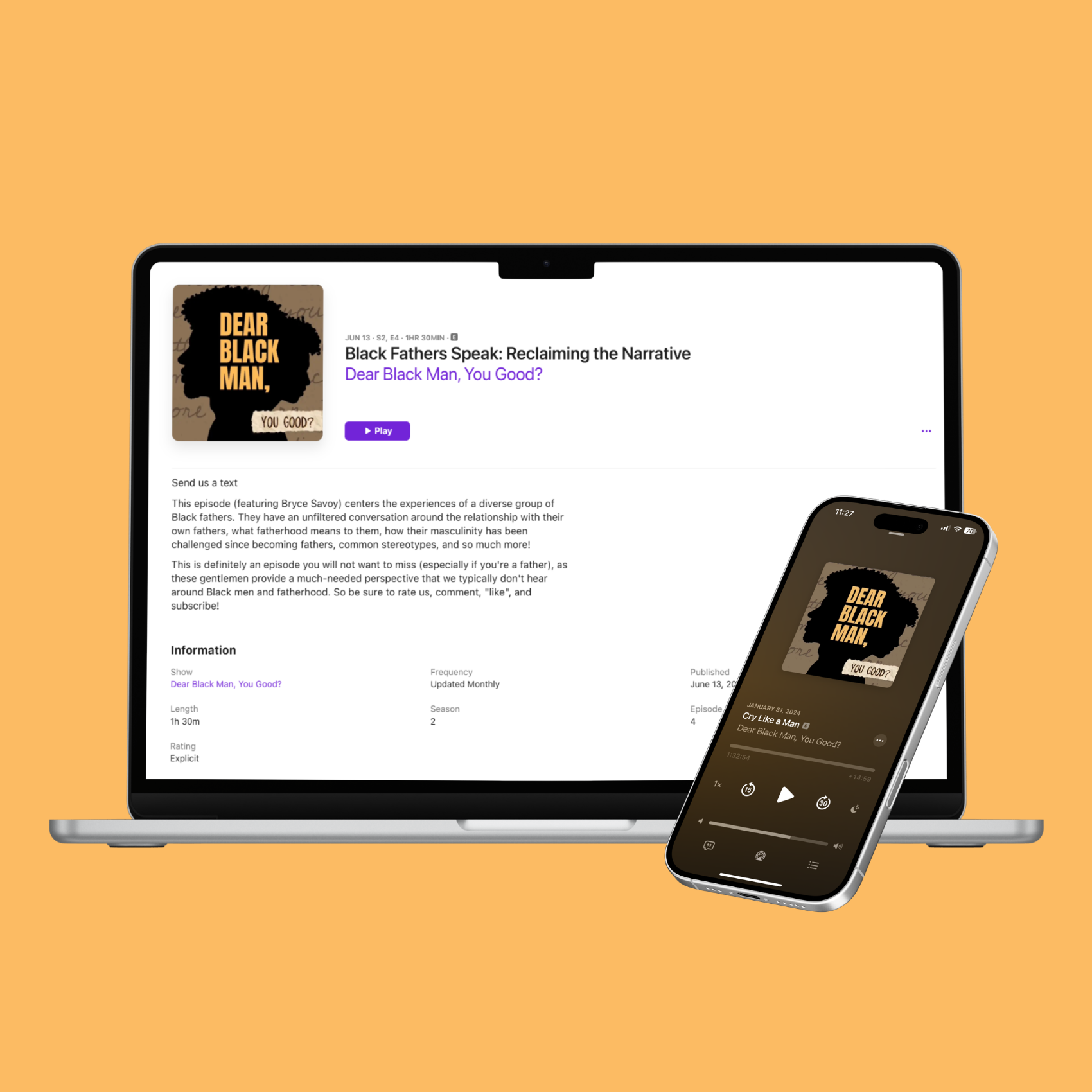
With their flagship initiative being a podcast, the logo needed to function powerfully at thumbnail scale, balancing clarity and impact, while remaining emotionally grounded and visually memorable embodying the organization's mission and values.
I interviewed Kalif Troy, board member and Director of Outreach, to gain insight into the organization and their audience. DBMYG started as a men’s group therapy session led by Marvin Toliver, LCSW. The group therapy sessions evolved into a podcast after the fourth or fifth cycle the sessions. The show creators wanted to showcase what therapeutic support could look like for Black men, offering a space to express feelings without relying solely on partners, therapists, or friends.
The podcast also allows listeners to hear from other Black men, which can be both helpful and inspiring. Their goal was to share the benefits gained from the group sessions and encourage more Black men to prioritize their mental and emotional well-being.
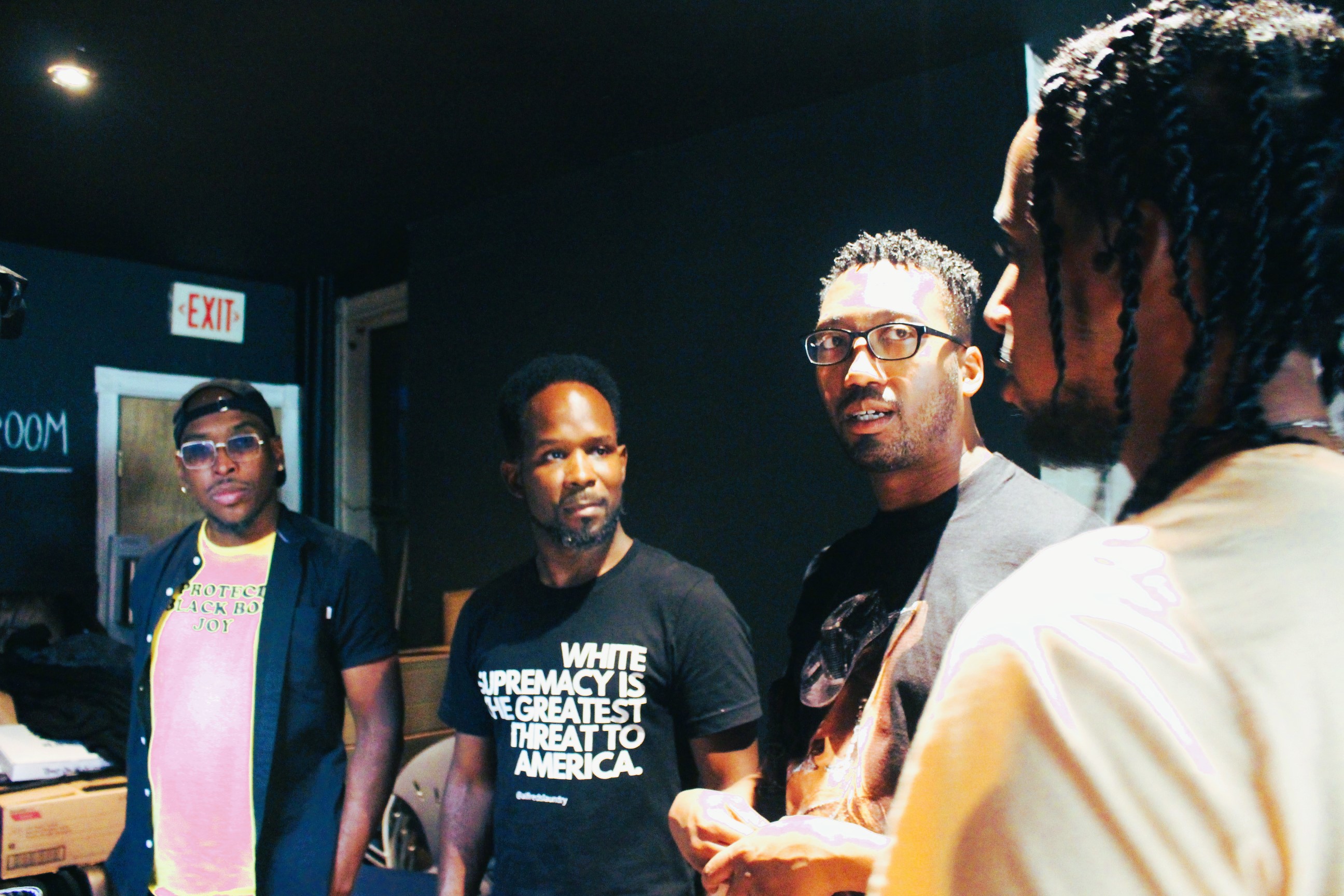
My goal was to design a logo that established visual trust and connection with the audience at a glance.
The imagery and typography needed to speak to their audience’s core pain points:
“We hear you.” Lack of accessible support spaces for Black men.
“We are you.” The stigma surrounding vulnerability and mental health.
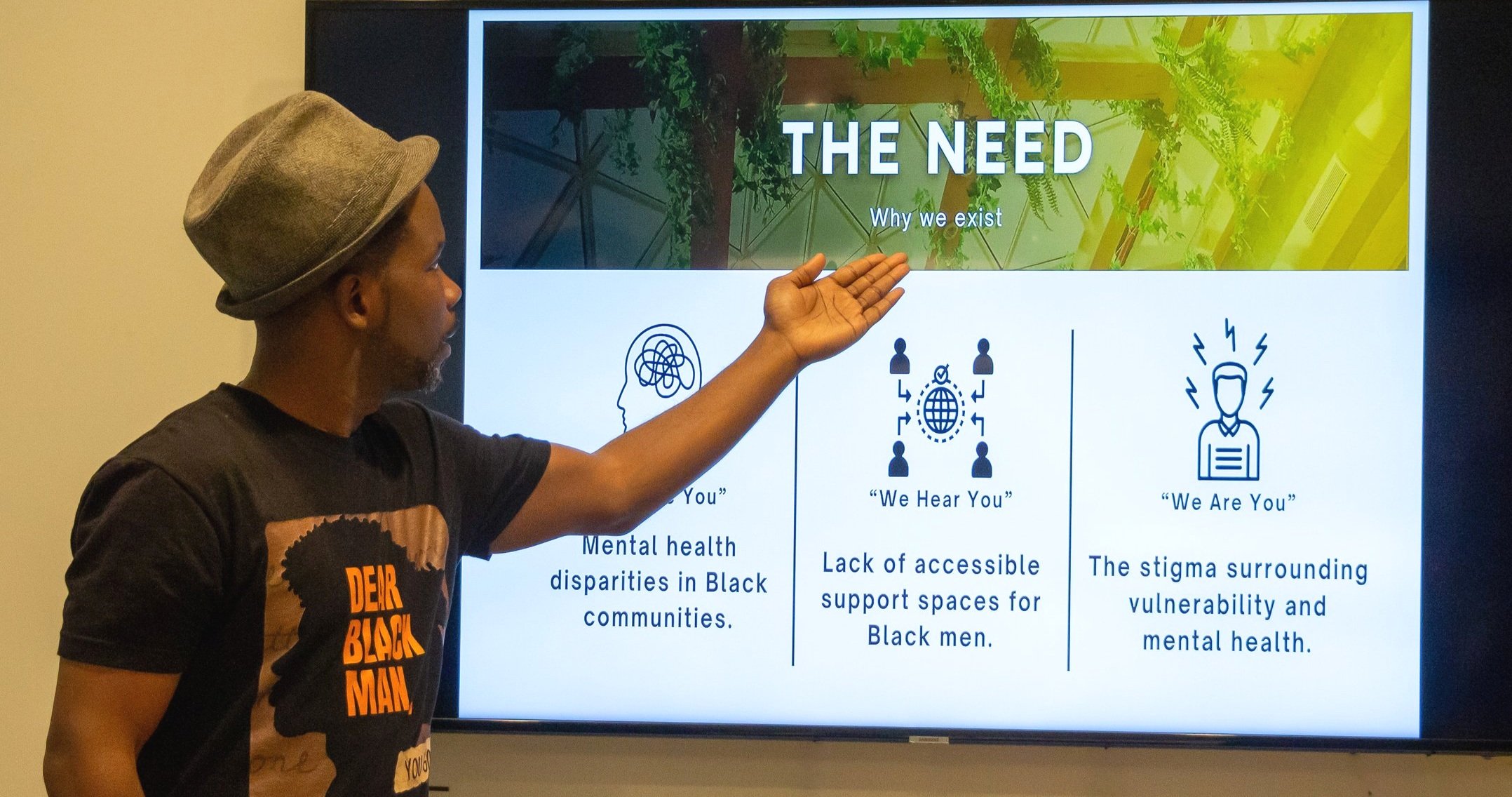
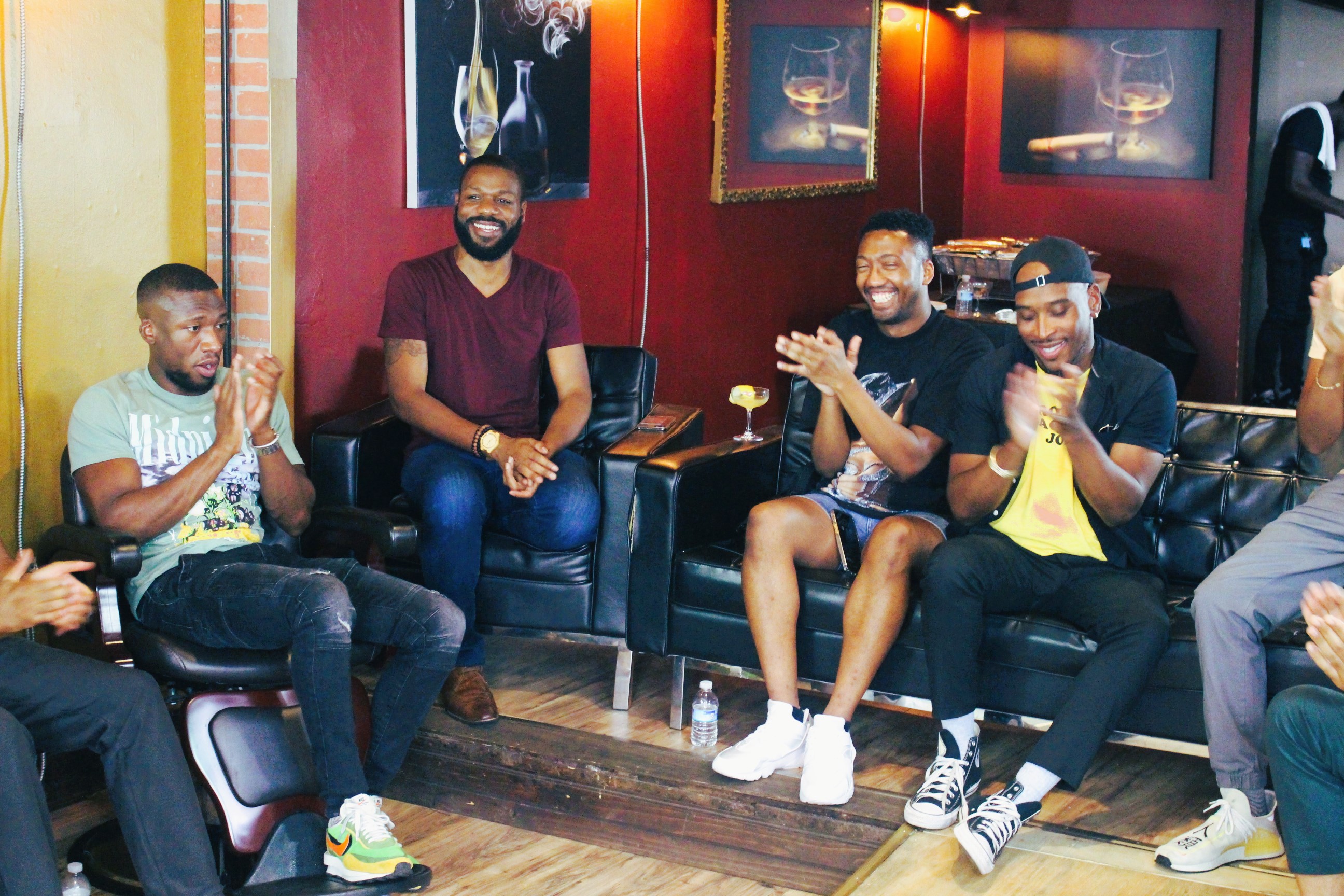
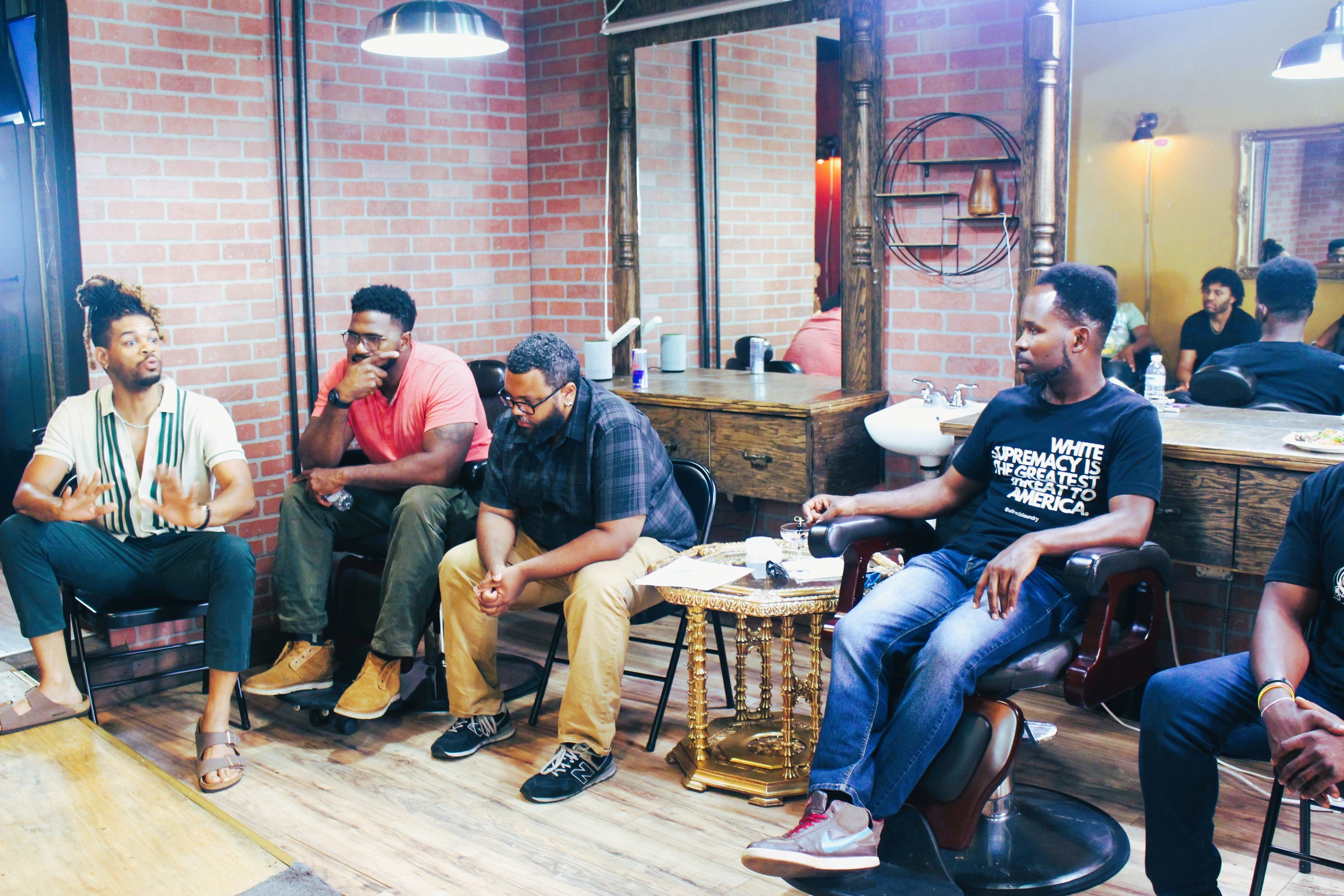
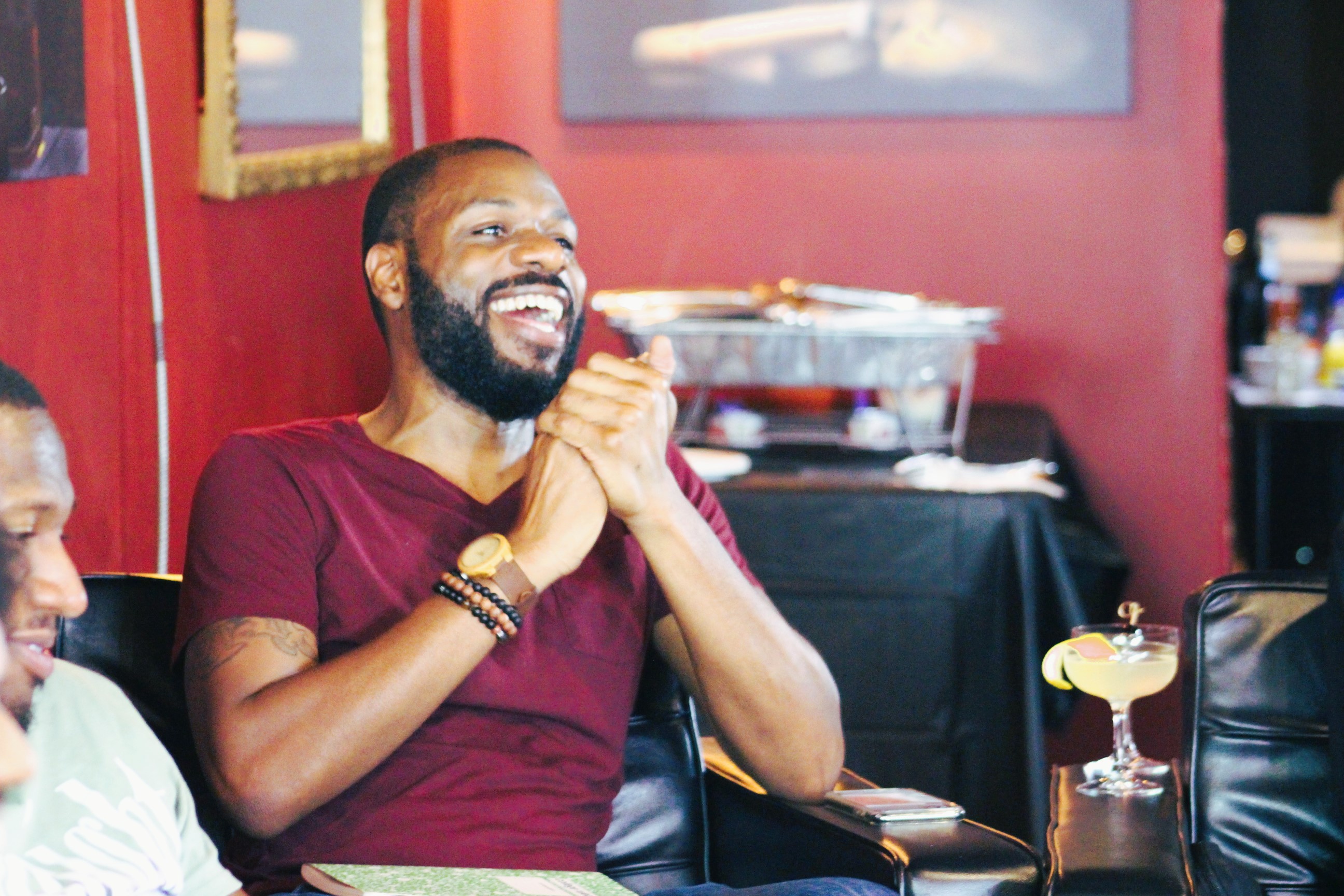
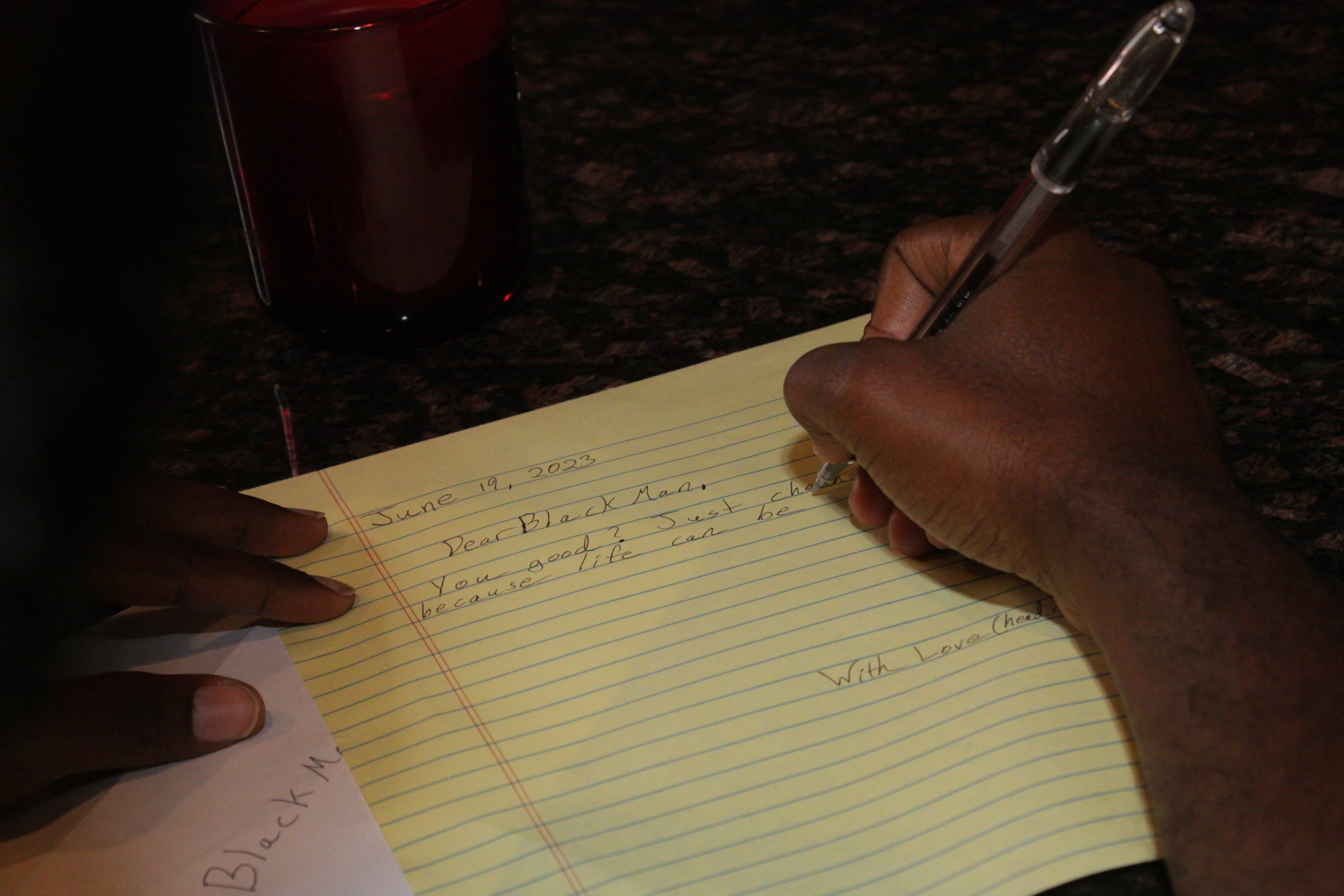
The design process involved brainstorming, prototyping, and audience feedback to validate concepts. I started by creating a mood board with images from DBMYG men’s group therapy sessions, visuals shared by Kalif, and imagery associated with Black manhood and vulnerability.
Barbershops have a cultural significance for Black men in America. It is considered a place where they often feel more comfortablespeaking candidly and getting advice from men who understand their livedexperience.
The empty barbershop chair represents an invitation to be in virtual community with other Black men, like saving them a seat. The tone of the podcast is the same as the men’s group— laid-back and relatable. Given the informal nature of barbershops, the imagery suggests to the listener that the tone of the podcast will be casual rather than clinical.
Incorporating images from the men’s group allows listeners to see Black men engaged in conversation in a supportive environment and is intended to signal to the listener that the podcast is an extension of that support. Therapy is still considered taboo by many Black men. By incorporating images of actual people, the listener can see themselves reflected back at them and aimsto chip away at the stigma.

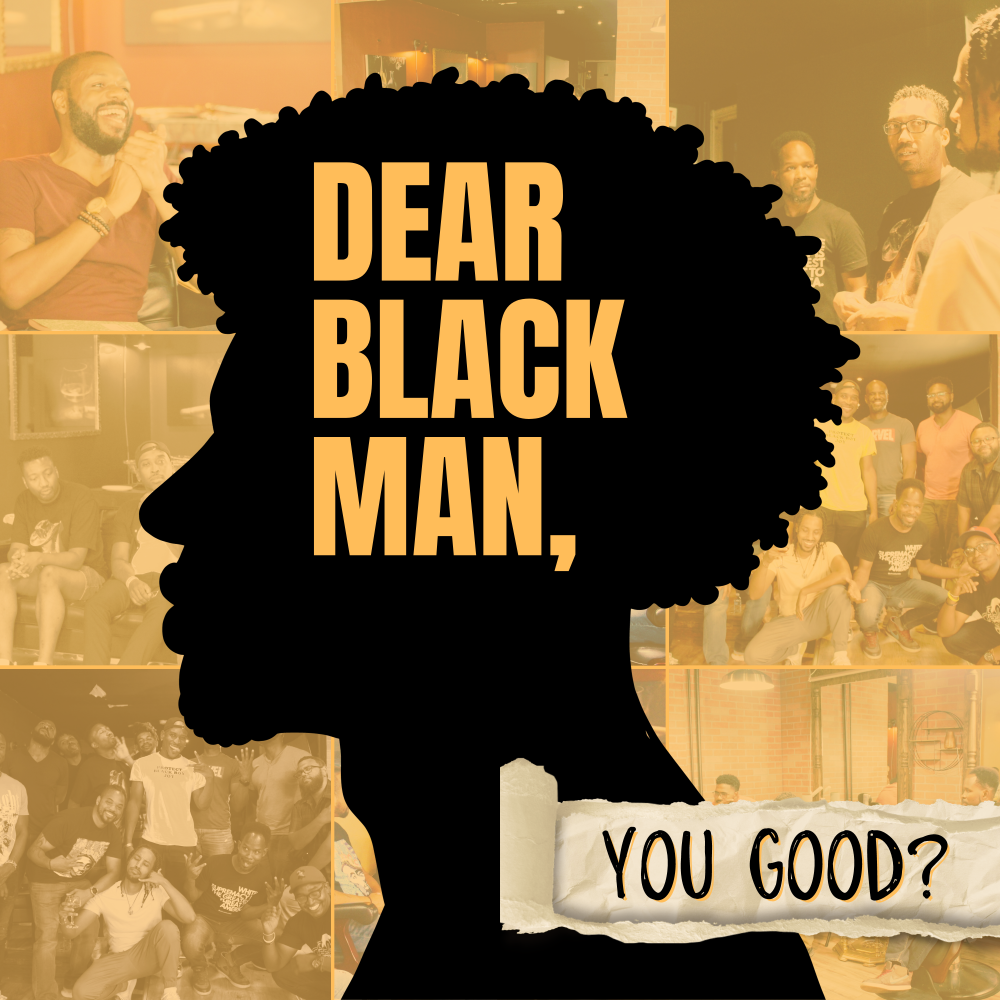
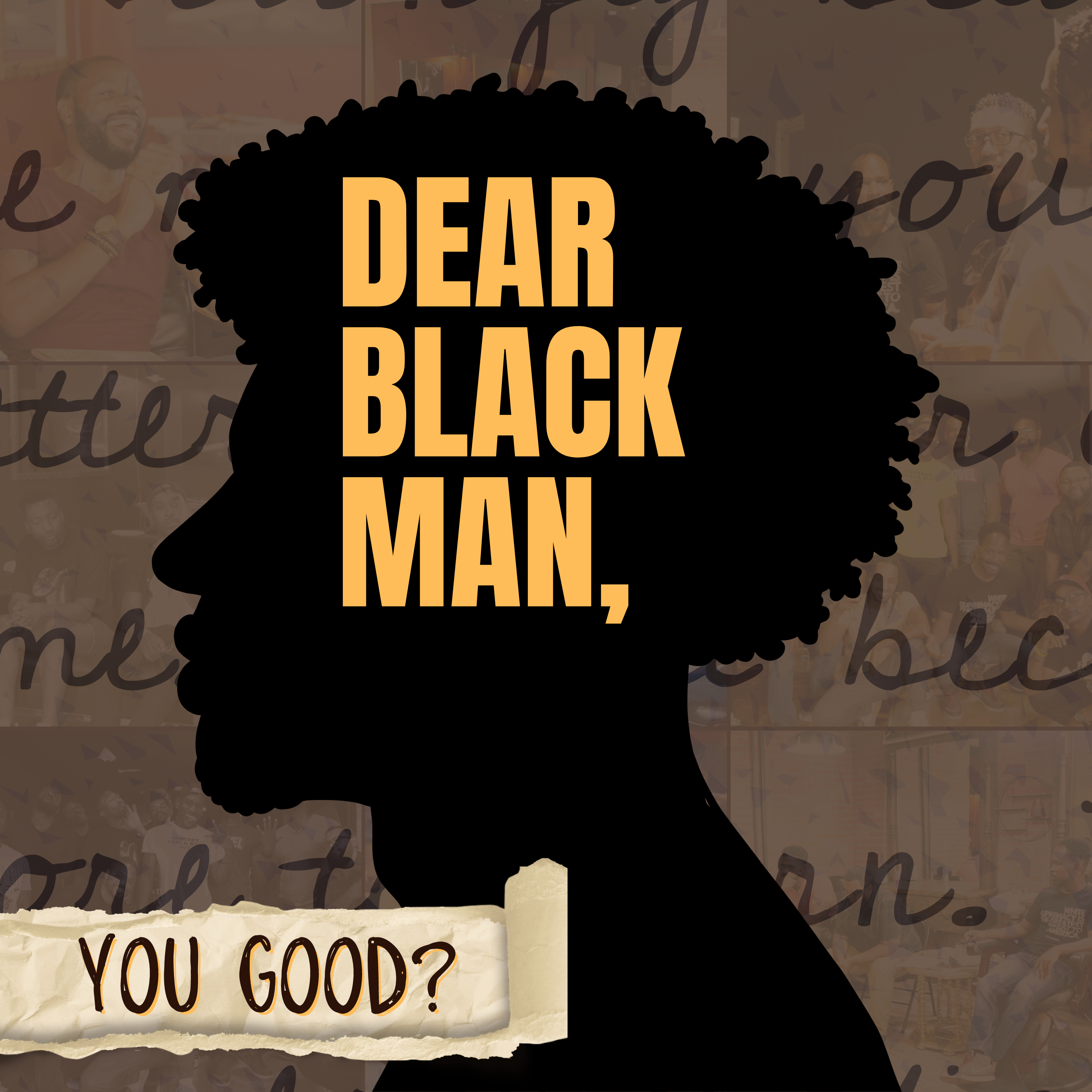
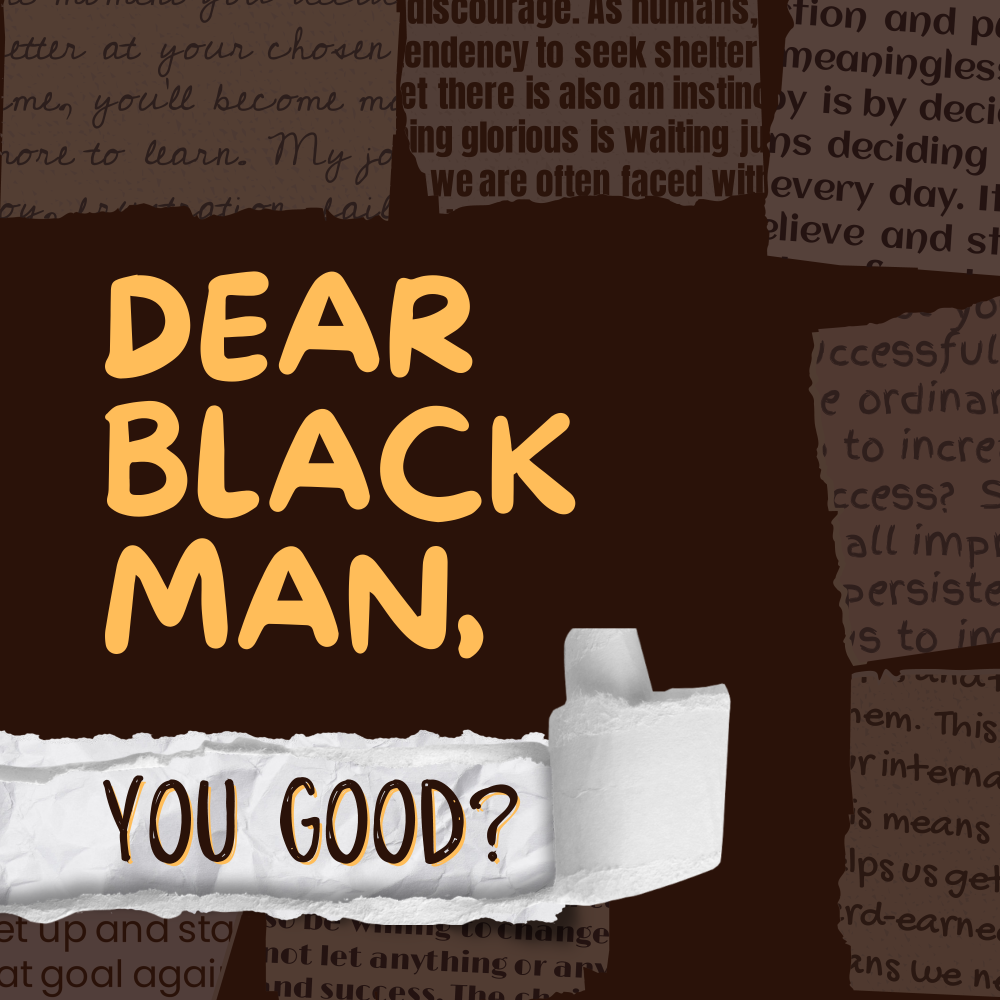
After gathering stakeholder feedback, I made the final adjustments to ensure the target audience would see themselves reflected visually, emotionally, and culturally.
The silhouette of the two faces represents duality in multiple forms:
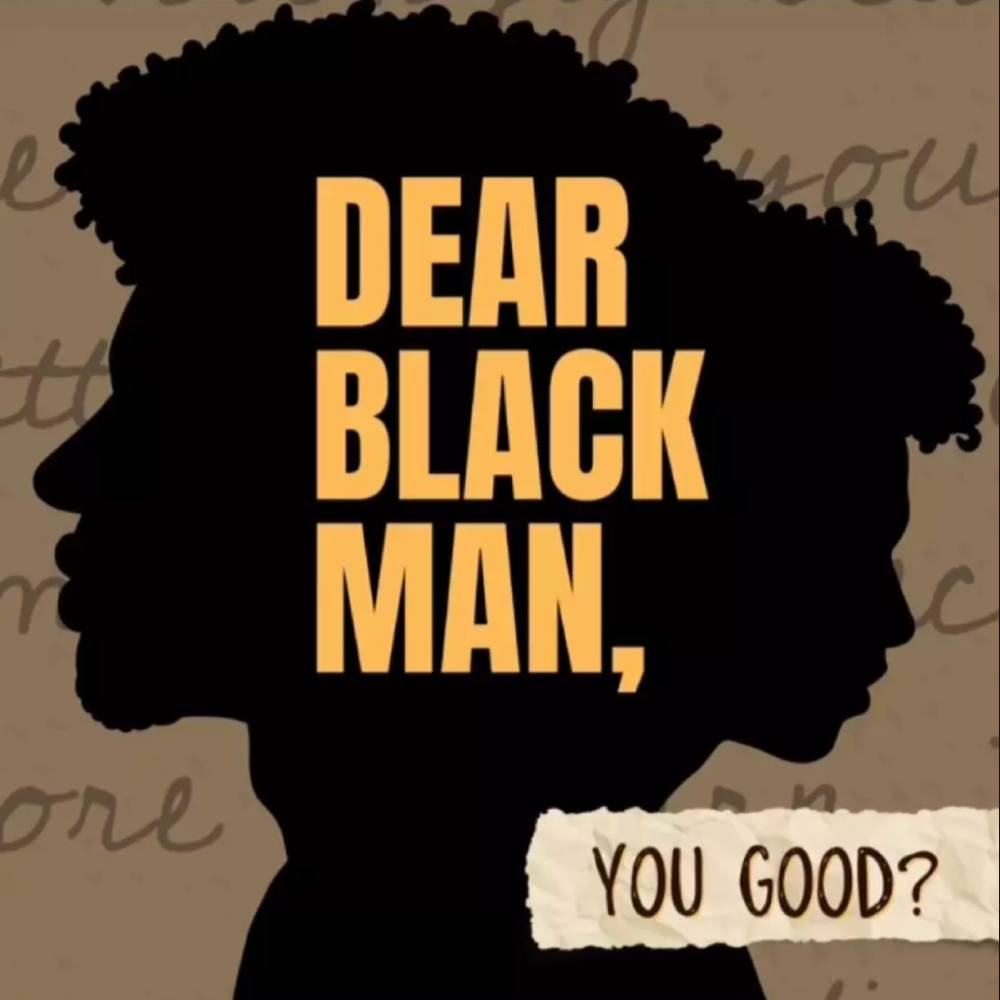
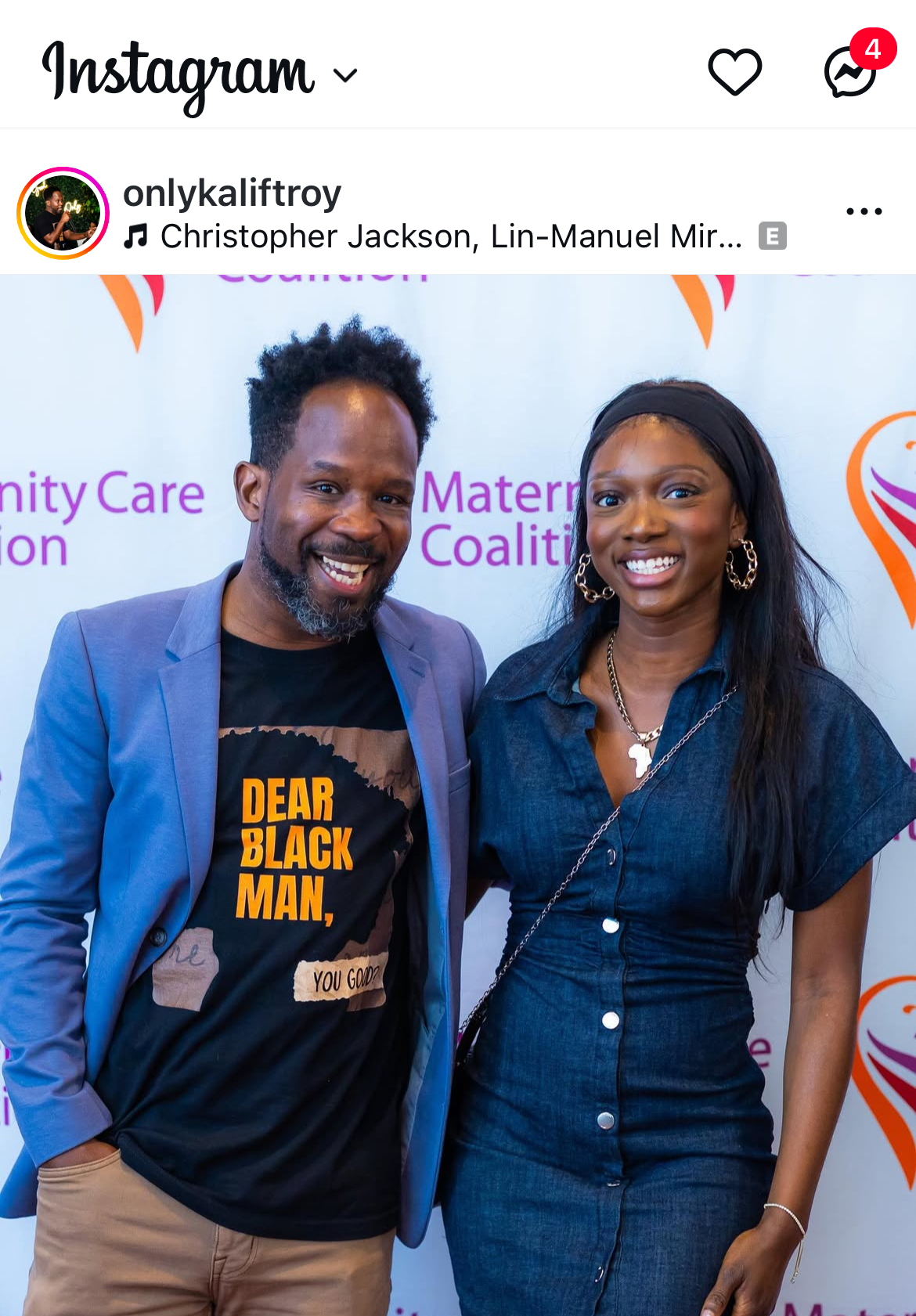
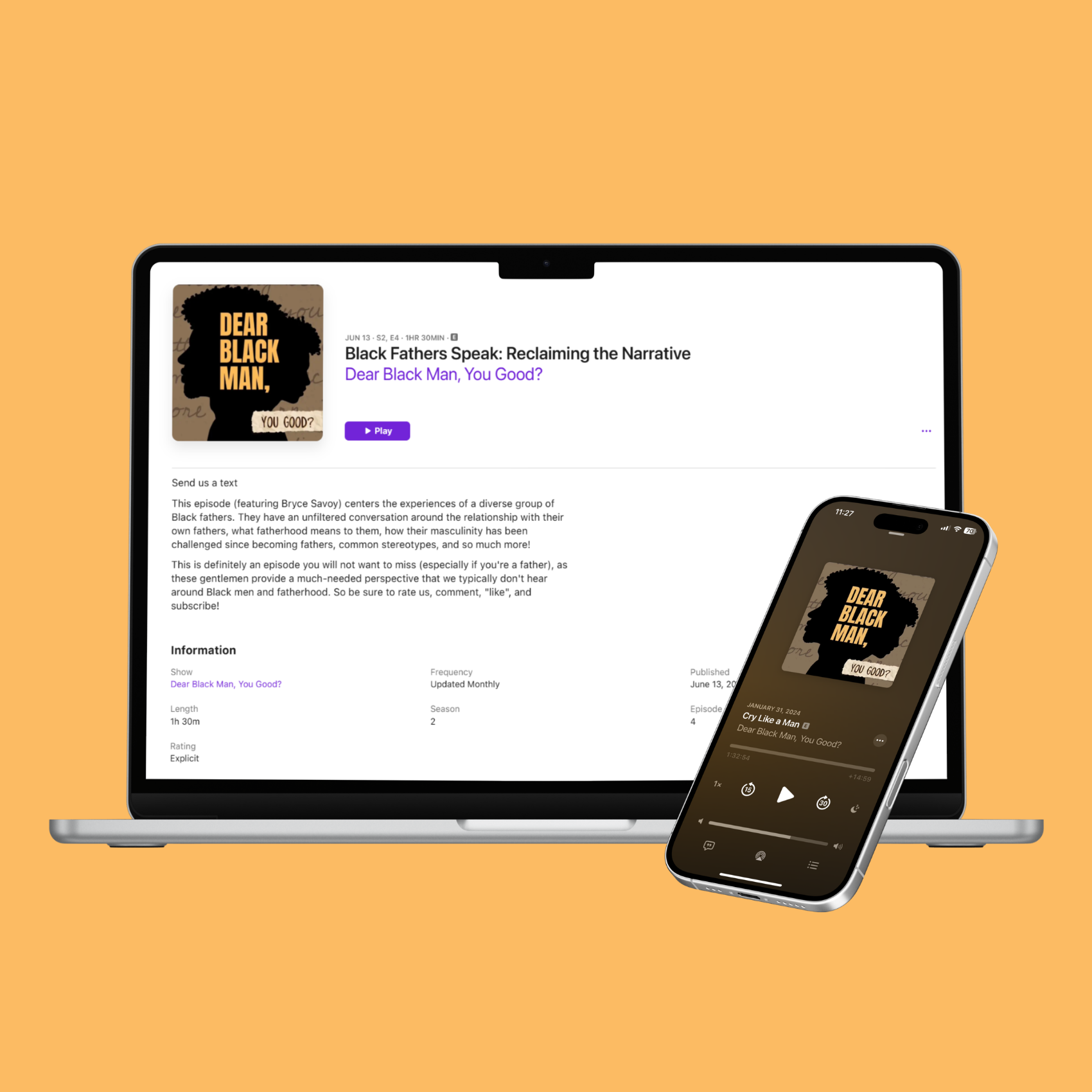
Overall, the logo resonates with DBMYG’s core audience. The positive reception spans generations, proving its wide appeal.
Key reactions include:
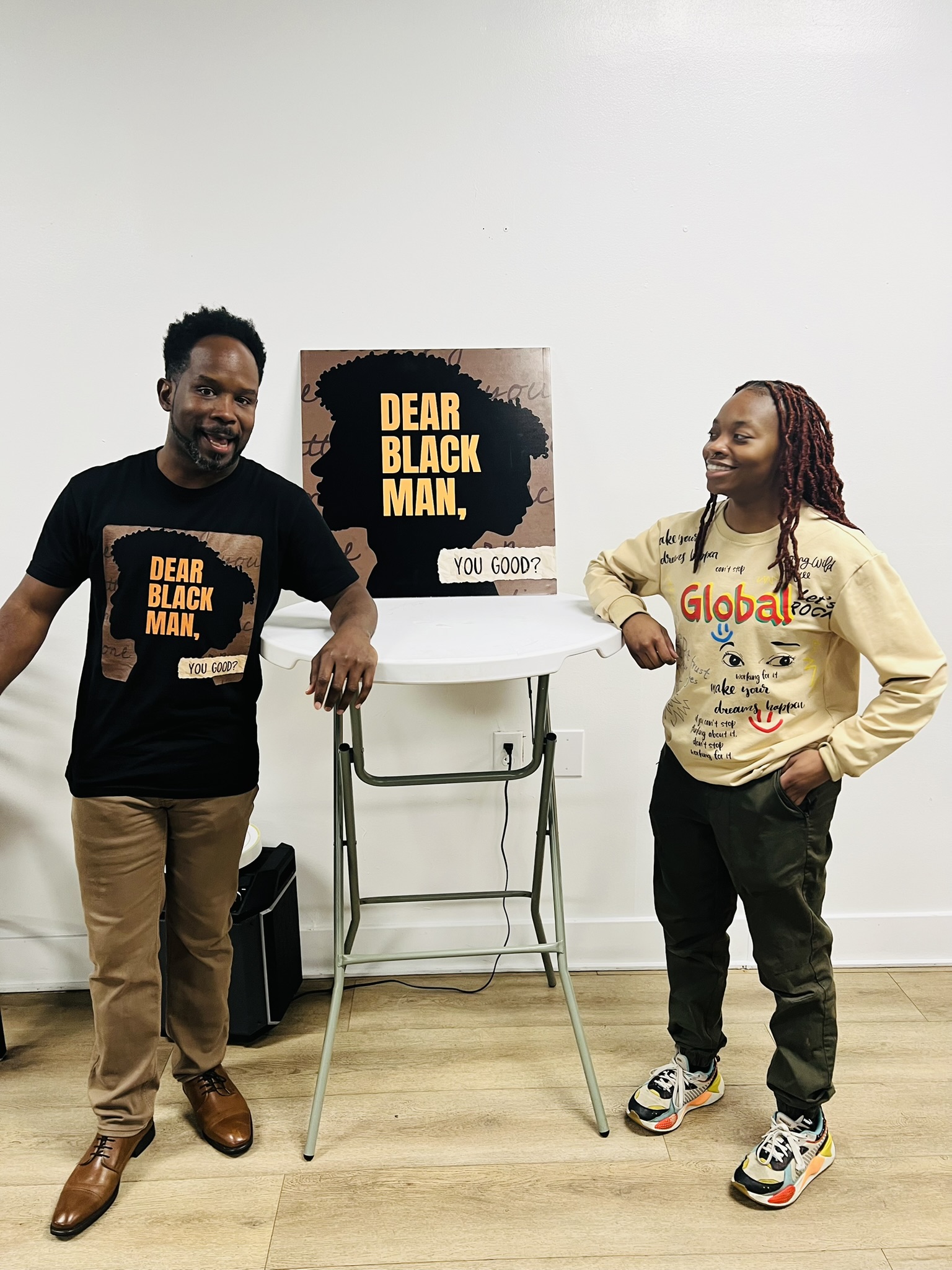

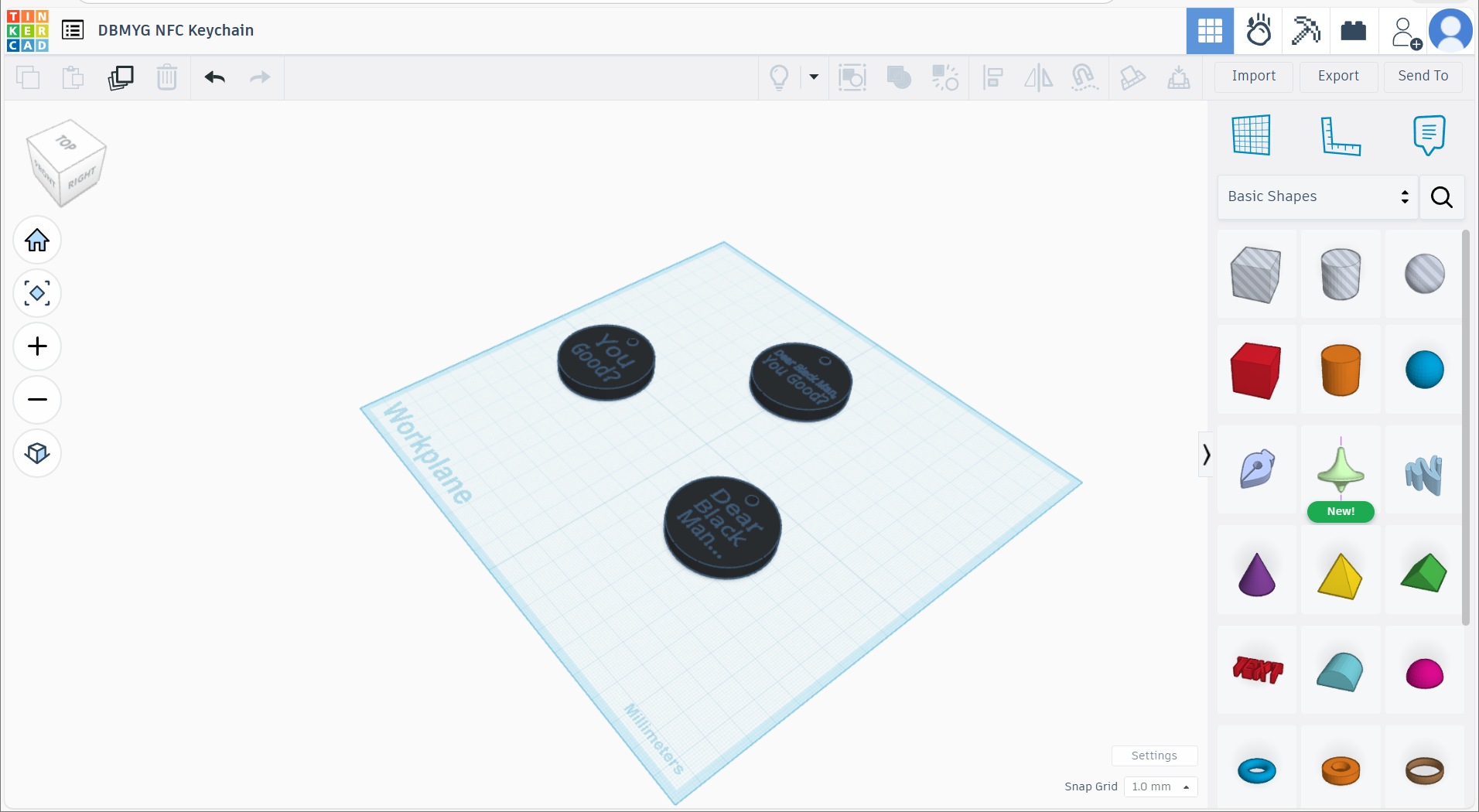
Currently, I am prototyping a tap-to-share business card in keychain form. The smart keychain contains an embedded NFC chip, making networking more efficient than traditional business cards while also providing income generating opportunities. Tap it with a phone to instantly open links to their podcast, website, and social media. Release is slated for summer 2026.